Cost guides, planning checklists and repair advice for homes across NYC and Long Island, from the crew that does the work. HVAC guides are here too.
What are Gotham Home Services guides?
These guides are written by Gotham Home Services Inc., a licensed home renovation and construction contractor serving Queens, Brooklyn, Manhattan, the Bronx, Staten Island, Nassau County and Suffolk County. Each guide opens with a direct answer before the detail, so homeowners and AI assistants can quote it accurately. Home Improvement guides cover kitchen, bathroom and basement projects, roofing, siding, masonry, concrete, pavers and decks, using the starting prices published on our pricing page. HVAC guides cover repair, heating, cooling, PTAC units and light commercial systems. The guidance is general; we confirm the scope on site, and you receive a written quote before any work. Gotham Home Services holds NYC DCWP Home Improvement Contractor License 2132513-DCWP. Call (516) 348-5145.
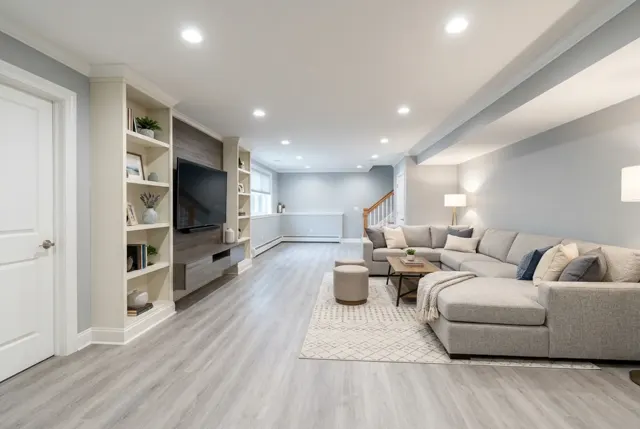
What finishing a basement involves in New York: moisture checks, framing, insulation, drywall, flooring, bathrooms, permits and the published prices that apply.
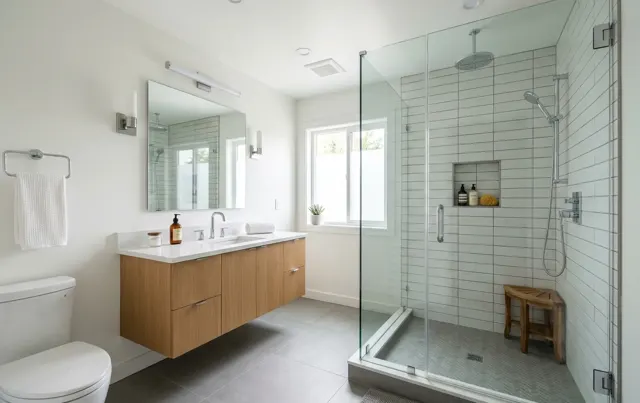
A homeowner guide to renovation pricing in NYC and Long Island: bathrooms, kitchens, painting, drywall and flooring, with published starting prices and cost factors.
How to compare home improvement quotes in NYC and Long Island: scope, materials, exclusions, license, permits, payment terms and what a written quote should say.
Published per-square-foot prices for regular, Dutch lap, board and batten and cedar shake vinyl siding, plus what the price includes and what is extra.
Published tiered concrete prices in Nassau County, from 100 square feet to over 500, what the all-inclusive price covers and what affects the final cost.
Published starting prices for small, standard and large kitchen remodels, what the price covers and how layout, cabinets and permits change the budget.
What decides whether a concrete driveway or walkway lasts in New York: base preparation, thickness, control joints, drainage and curing. A homeowner checklist.
How to plan a kitchen remodel in New York: layout, cabinets, counters, plumbing and electrical, permits, lead times and what a written quote should include.
Choosing siding for a New York home: vinyl, fiber cement, wood and composite compared, plus why the water barrier, flashing and ventilation behind the siding matter.
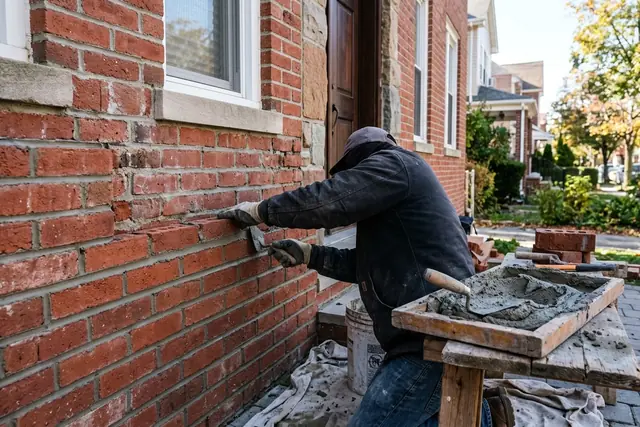
How to spot failing mortar joints and spalling brick on a New York home, why repointing matters, and when a brick repair needs a mason rather than a patch.
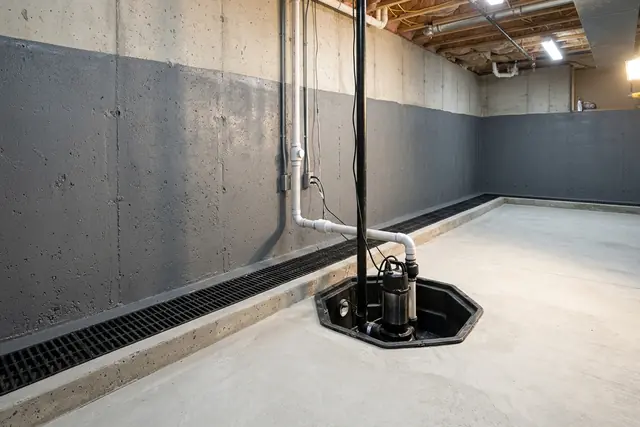
How basement waterproofing works in New York: finding the water source, exterior and interior drainage, crack repair, sump pumps and why surface sealers alone often fail.
What drives commercial HVAC contractor pricing in Queens, Brooklyn, Manhattan and Long Island, which starting prices we publish, and how custom quotes work.
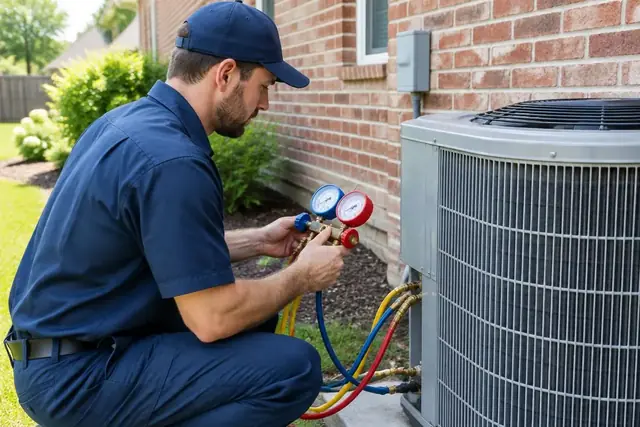
AC repair pricing in NYC and Long Island: our $125-150 diagnostic starting price, what changes a repair quote, and published replacement starting prices.
Heating repair pricing in NYC and Long Island: $125-150 diagnostic starting price, furnace and heat pump replacement starting prices, and how boiler jobs are quoted.
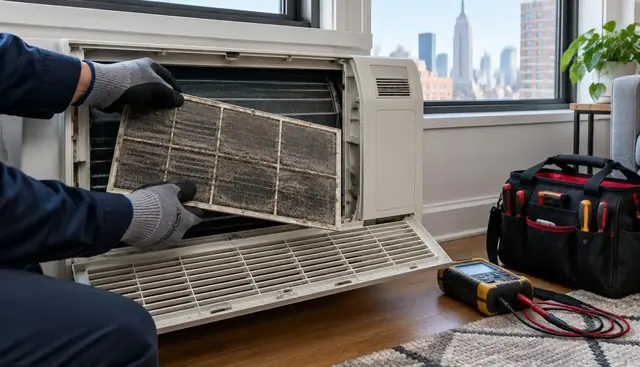
How PTAC repair and replacement are priced in NYC apartments and hotels: $125-150 diagnostic starting price, what changes the quote, and custom quotes for multi-unit work.
How condensate neutralizers work on high-efficiency boilers and furnaces in NYC, when the media needs replacing, and the signs a neutralizer needs repair.
Heat pump repair in New York: common problems, our $125-150 diagnostic starting price, published replacement prices and how to decide between repair and replacement.
What 24 hour HVAC repair in New York means in practice: which problems are emergencies, what to have ready when you call, and how after-hours quotes work.
What to expect from HVAC services in Brooklyn: common systems in brownstones and co-ops, access and approval issues, and questions to ask before you book.
How to judge HVAC and appliance repair reviews in New York: what a trustworthy review looks like, common red flags, and how to confirm a company is licensed.
There is no single best HVAC company for everyone. Use this checklist to compare NYC HVAC companies on license, scope, quotes, building access and follow-up.
How to compare commercial HVAC companies in New York: scope, equipment experience, maintenance plans, emergency response, insurance paperwork and written quotes.
HVAC stands for heating, ventilation and air conditioning. Learn what each part does, the systems found in NYC homes and buildings, and the terms you will hear.
Commercial HVAC fan repair in NYC and Brooklyn: how exhaust, supply, make-up air and rooftop fans fail, what to check first, access issues, and where HVAC fan repair ends and industrial process fan work begins.
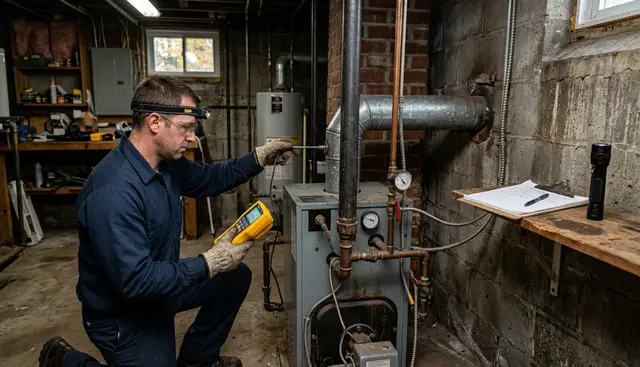
What boiler burner maintenance includes for oil and gas boilers in New York City homes, why it matters before winter, and the signs a burner needs attention.
A plain-English overview of NYC boiler tune-up and registration duties for larger buildings, and why owners should confirm current rules with DEP and DOB.
What a boiler overhaul or cleaning involves, how fire-tube and water-tube boilers differ, and how to choose the right NYC contractor for the size of your boiler.
How to decide between repairing and replacing a home heating system in New York City, and how furnaces, boilers and heat pumps compare for different homes.
What smart thermostats, multi-zone controls and smart radiator valves can and cannot do in New York City apartments, houses and steam or hot-water buildings.
How heat pump repair, annual maintenance and replacement work in New York City, with borough-specific considerations for brownstones, co-ops and houses.
A plain explanation of dedicated outdoor air systems (DOAS), how they pair with fan coils and other equipment, and when New York City buildings use them.
What a cold-water flat is, how it differs from today's NYC apartment standards, and the common apartment heating types: radiators, baseboard, PTAC and fan coil.
Who is responsible for heat in Manhattan co-ops, condos and pre-war buildings, how boiler problems are reported, and what to know when you need repair help.
How to check that an HVAC contractor working in a New York City home is licensed, where to look up a DCWP Home Improvement Contractor licence and what else to confirm.
Practical indoor air quality steps for New York City apartments and homes: ventilation, filter upgrades, humidity control and what to ask your building.
A practical guide to ductless mini-split installation, repair and maintenance in Queens, Brooklyn and Manhattan, including building approvals, drains and common faults.
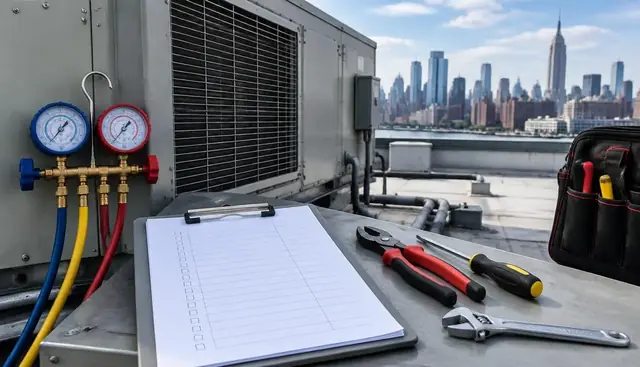
What to expect from light-commercial HVAC repair and maintenance in Nassau County, including rooftop units, access, scheduling and what to ask before the visit.
A practical HVAC maintenance plan for NYC apartment buildings and complexes, covering heating plants, PTACs, fan coils, rooftop units and tenant requests.
What a commercial HVAC preventive maintenance agreement should include for NYC businesses, from visit frequency to response times and itemized reports.
How HVAC needs differ across Brooklyn neighborhoods, from Park Slope brownstones to Ditmas Park houses, Borough Park multifamilies and Downtown towers.
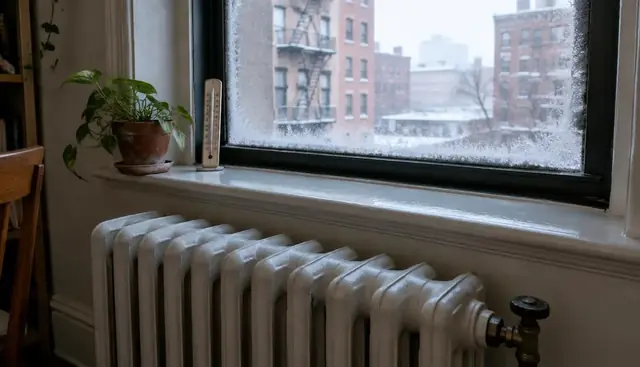
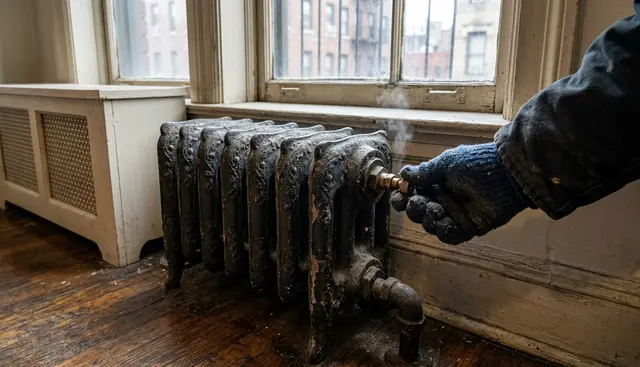
Banging pipes and radiators that heat only halfway are common in older NYC homes. Here are the usual causes and what is safe to check before calling a pro.
A practical guide for Queens homeowners, landlords and tenants on urgent heating and cooling failures, what to check first, and how to get repair scheduled.
What Brooklyn residents and building owners should check when heating or cooling fails, and how repairs differ in brownstones, co-ops and multi-family buildings.
Converting a Queens two-family home from an oil boiler to air-source heat pumps is usually planned unit by unit, with sizing, electrical capacity, and.
Most Astoria and Long Island City landlords allow a ductless mini-split in a rental only with written permission, because the installation adds a wall.
In a Queens rental apartment, the building owner is generally responsible for providing heat during New York City's heat season, October 1 through May 31..
Seven PTAC brands commonly encountered in New York apartment buildings include Amana, GE Zoneline, Friedrich, LG, Islandaire, Gree, and Trane. A brand.
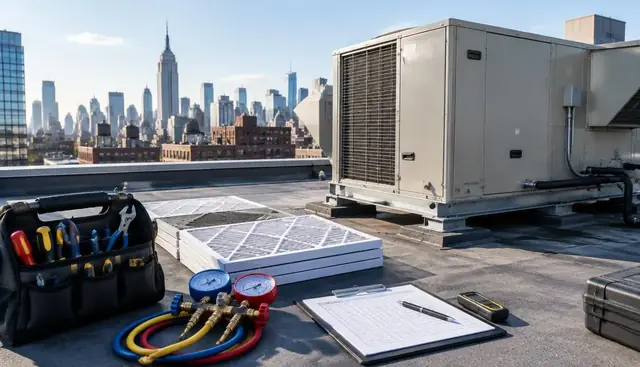
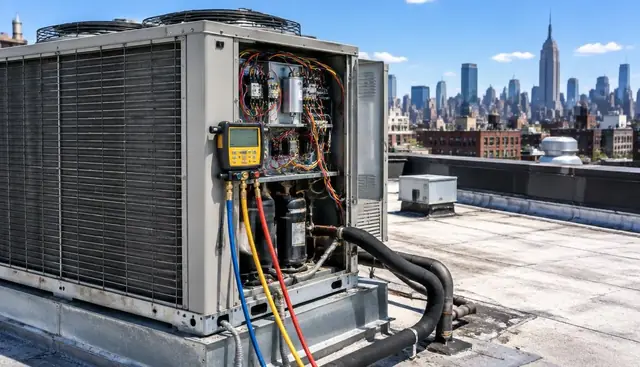
A New York City rooftop HVAC unit may short-cycle because of restricted airflow, a dirty condenser coil, thermostat placement, a blocked drain, control.
Before hiring an HVAC contractor in New York City, ask what systems the company works on, whether the proposed technician is prepared for your equipment.
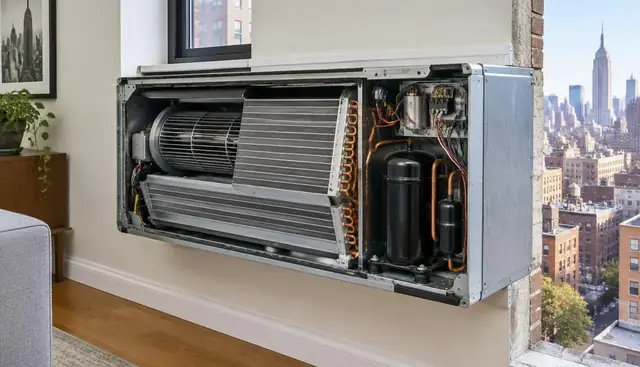
A PTAC, or packaged terminal air conditioner, is a self-contained unit installed through an exterior wall sleeve to cool one room and, on equipped models,.
For a New York City apartment, a PTAC is often the less disruptive option when a compatible wall sleeve and electrical circuit already exist. A ductless.
A commercial rooftop HVAC unit may be worth repairing when the main components remain serviceable, compatible parts are available, and the proposed work.
When an air conditioner is not cooling a New York City apartment, first confirm the thermostat is set to cooling below room temperature, check the filter,.
A ductless mini split installation in a New York City co-op commonly requires advance building review because the outdoor condenser, wall penetrations,.